
New York City’s Budget Deficit
- Paul Francis
- Feb 4
- 14 min read
Commentary # 26 by Paul Francis
PDF available here:
I wanted to add an introduction to today’s commentary on New York City’s budget deficit. The body of this commentary was published as an article in Vital City on February 3, 2026, under the title Evaluating Mamdani's Diagnosis of New York City's Budget Deficit.
In a City Hall press conference last week, Mayor Mamdani expressed surprise that the City was facing a large budget deficit going into Fiscal Year 2027. However, I have pointed out, including in my commentary Tax Revenue Is Destiny (also published in Vital City), and numerous budget observers were pointing out this looming deficit throughout 2025.
I wrote this article for Vital City to help explain how New York City got into this budget mess. Although Mayor Mamdani tried to lay the blame for the deficit on budgeting practices of Mayor Adams and decisions made by former Gov. Cuomo between 2011-2021, the larger explanation lies with the City’s use of nonrecurring revenues for ongoing programs, policy decisions (nearly all of which were supported by Mr. Mamdani as a legislator and a candidate) to significantly expand spending without a sufficient revenue base to support it, and a significant unfunded mandate from New York State to implement caps on NYC class sizes. I also explain in the article why New York City faces a very significant budget deficit, while New York State is in its best budget condition in years.
Many political observers greeted Mayor Mamdani’s budget announcement as stereotypical scapegoating of the predecessor by the newly elected Mayor. A number of observers suggested that it was hypocritical of Mayor Mamdani to blame Gov. Cuomo for State decisions that may have negatively affected New York City while absolving from blame any actions taken by New York State’s governor for the last five years, Gov. Kathy Hochul. It was also reported that Gov. Hochul was “peeved” at what she regarded as a “fabricated crisis” to make the case for Mayor Mamdani’s long-standing request to increase personal income and corporate income taxes.
Although Mayor Mamdani’s diagnosis of the budget problem was unconvincing to many, he did raise a fundamental question that has bedeviled New York City mayors and New York State governors since time immemorial. That is the question of what constitutes New York City’s “fair share” of State spending. I discuss this issue in the Vital City article, noting that the relative financial capacity of New York City and New York State has varied over the decades, with a number of reversals of fortune over the last 50 years. Mayors will always advocate for more resources for the City, but governors need to take into account the needs of the entire state – many parts of which have less capacity to finance their own needs than does New York City.
Discrete policy decisions, such as regional cost differences in Medicaid reimbursement, are marbled throughout the New York State Budget. School Aid – the State’s second largest spending category after Medicaid – is probably the clearest example of the State attempting to define what constitutes an equitable allocation of funding across various communities based on their ability to pay (i.e., the “wealth index” of property values and personal income) and the needs of the particular school districts. However, as I note in the article, politics usually trumps these objective formulas, as evidenced by the rigid “regional shares” of School Aid that have endured despite numerous reform efforts over the last 20 years.
We look forward with great interest to the release of the New York City Preliminary Budget on February 19 and the ongoing discussion of the issues raised in my article. The subsequent dance between the City and the State – and between progressives in the legislature and the moderate in the governor’s office – will be very interesting to watch.
***
Before reprinting the Vital City article as a Step Two Policy Project Commentary, I did want to address a correction to one point raised in the recent Commentary Thoughts on the FY 27 Executive Budget – Part I.
We try hard to get everything right in our Step Two Policy Project papers. When we make a material mistake, we will let you know about it. In Thoughts on the FY 27 Executive Budget – Part I, I wrote that the amount of federal payments to New York for the Essential Plan under both Section 1331 and Section 1332 waivers under the ACA generally represent 95% of the amount of the federal premium tax credit enrollees would have received had they purchased a Qualified Health Plan (QHP) on the NYSoH marketplace. On this logic, we estimated that the federal subsidy related to individuals enrolled in the Essential Plan who were in the income cohort of 200%-250% of the federal poverty level was approximately $6,500 per year.
However, the federal approval of the Section 1332 waiver limited the aggregate amount the federal government would pay in connection with the 200%-250% of FPL cohort to the amount that would be paid based on the expected enrollment in the Essential Plan by individuals in this cohort in order to maintain “budget neutrality.” Because QHP enrollment among this income cohort was only about 78,000, application of that principle limited the federal payment for this cohort to $570 million annually. My observations in the Commentary about transparency aside, this statistic is available publicly from CMS, so we could have caught it.
Because actual enrollment in the Essential Plan reached approximately 460,000 people, the actual federal subsidy on a per capita basis is only about $1,200 – a far cry from our estimate. That amount will be even lower now that the enhanced Premium Tax Credits have expired. This suggests that our potential remedy – to get federal approval for a parallel 1332 waiver just for the 200%-250% cohort – is, as the expression goes, “a dog that won’t hunt.” This also means that addressing the loss of affordable coverage for this large cohort of New Yorkers will be more difficult and more expensive than I had hoped.
Although we got that particular detail wrong, another development this week suggests we have been more on track in arguing that the Trump administration really does not want to significantly reduce Medicaid funding for New York before the 2026 midterms. As we had predicted might happen, CMS last Thursday finalized a rule that will delay the phaseout of the MCO tax until December 31, 2026, enabling the State to collect approximately $1 billion in additional federal funds that currently are not reflected in the Executive Budget. (Crain’s)
This below-the-radar-screen action by CMS reinforces our belief that, in addition to the legal reasons, political considerations weigh in favor of the federal government granting the State’s request to revert to the Section 1331 Essential Plan and utilize resources in the Basic Health Program Trust Fund to pay for the costs of covering otherwise ineligible non-citizens in the Essential Plan. This would eliminate the need for the State to spend more than $2 billion (that is currently reflected in the FY 27 Executive Budget as being spent) to provide State-only Medicaid to the Aliessa population.
In Budget terminology, the $1 billion in additional MCO tax revenue and the $2 billion now reserved for covering the Aliessa population have become a Budget “avail” for which many stakeholders will have ideas about how to use it.
***
The following is the text of the Vital City article titled:
Evaluating Mamdani’s Diagnosis of New York City’s Budget Deficit
With an air of indignation worthy of Captain Renault discovering gambling in the back room of Rick’s Café, Mayor Zohran Mamdani announced in a late January City Hall press conference that he was shocked to discover that New York City is facing a deep budget deficit, of approximately $12 billion between the current and upcoming fiscal years.
What is surprising about Mamdani’s surprise is that New York City’s dire fiscal condition has been widely known for the last year but was conveniently ignored by Mamdani and the New York City press corps during the mayoral campaign. Mamdani’s close ally, New York City Comptroller Brad Lander, estimated in August 2025 that “the City will end FY 2026 with a gap of $4.2 billion (3.6% of total revenues), growing to $8.8 billion in FY 2027.” The Independent Budget Office, the Citizens Budget Commission and the New York State Comptroller’s office issued similar forecasts during 2025.
So how did New York City get into this position? Mamdani’s explanation at his press conference was simple: the deficit was caused by a combination of “gross fiscal mismanagement” by Mayor Eric Adams and actions taken by former Gov. Andrew Cuomo (before he resigned in August 2021) to take money away from New York City.
Mamdani is not entirely incorrect: Adams’ budgeting practices and decisions made at the state level both played roles in contributing to the City’s budget deficit. However, Mamdani ignores the larger contributors to the City’s budget deficit, which he and his political allies had a direct role in creating.
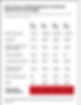
At a surface level, the sources of the budget deficit were identified by newly elected City Comptroller Mark Levine in his FY 27 Budget Preview as being attributable to the loss of nonrecurring revenue received in prior years that will not be available in FY 27 and, especially, to chronic underbudgeting of expenses by the Adams administration.
These two tables from Comptroller Levine succinctly lay out the differences in estimated budget gaps between the last budget of the Adams administration and current estimates and the specific areas of chronic underbudgeting:

But Levine’s analysis does not address the underlying causes of the City’s precarious budget condition. It is also instructive to understand why the City’s financial condition is so much worse than that of New York State, which is in unusually good financial condition this year, largely because of a windfall in tax revenue.
Two main factors explain why New York State is in a better position than the City in terms of revenue. First, in 2021, New York State increased its personal income tax on high earners (who account for roughly 40% of total income tax revenue in both the City and the State), as well as modestly increasing the State corporate income tax rate, while New York City’s personal income and corporate tax rates were not increased.
More importantly than the increase in tax rates, New York State benefited from the recent surge in personal income to a greater extent than New York City because a much higher percentage of the State’s tax receipts come from personal income taxes (including the Pass-Through Entity Tax) and corporate income taxes than is the case for New York City. These taxes account for nearly 80% of State tax receipts, but only for about 35% of City tax receipts. Although New York City’s other revenue categories, such as property tax and sales tax, have also been increasing, the rate of personal income and pass-through tax revenue has grown at a higher rate, especially in the last three years, because of the booming stock market.
On the expense side, New York City engaged in the unwise practice of using one-time federal pandemic aid to fund ongoing programs, while the State mostly used that revenue to build up reserves. Rather than ending or contracting these programs when the inevitable federal funding cliff arrived, the City just substituted its own funding to keep them going.
Perhaps the most prominent example of this was the decision of Mayor Bill de Blasio to use roughly $1 billion in federal pandemic aid to greatly expand the city’s 3-K early education program. When the temporary federal funding expired in fiscal year 2024, the City backfilled the spending out of its own budget. The baseline cost of 3-K in New York City is now $1.3 billion.
Similarly, the City used temporary federal pandemic aid to expand the number of child care vouchers and subsidized slots. When the funding ran out in September 2024, it created a need for close to $900 million in funding annually to avoid taking away childcare slots. The City effectively held these slots hostage to negotiate additional funding from the State. Ultimately, the State provided $350 million in additional funding in the FY 2026 enacted budget, but still stuck the City with the obligation to increase its own spending for this purpose by $350 million while accepting an increased City maintenance of effort requirement for child care spending of an additional $328 million.
An even larger contributor to the City’s current fiscal distress was the City Council’s creation of new programs which New York City’s tax base could not support. Ironically, in light of Mamdani making Adams the fall guy for the City’s budget problems, Adams sought to resist a number of these expanded spending programs while Mamdani supported them.
The most expensive of these new initiatives was the expansion by the City Council of the City’s rental subsidy program, known as CityFHEPS. The original objective of the program is to prevent evictions by providing taxpayer-funded rental subsidies as a last resort to prevent homelessness. The cost of the CityFHEPS program was exploding even before the City Council adopted legislation to lower these barriers to entry and, in effect, create a massive new entitlement program to rental subsidies.
As noted by Comptroller Brad Lander in 2025, the Adams administration “estimated that expanding the eligibility rules would increase City costs by $17.2 billion over five years… [while] [t]he City Council estimated the cost of the package of laws over five years at $10.6 billion.” Although the increased costs of the CityFHEPS expansion were repeatedly cited by both critics and supporters of the expansion bill, Mamdani supported the expansion while in the Assembly and pledged to implement it if elected mayor. Comptroller Levine estimates that the cost of the expanded CityFHEPS program in FY 27 will be approximately $2.5 billion, of which $2.0 billion is not reflected in the Adams administration budget. That’s a significant sum, even in a budget that likely will exceed $120 billion. And as with child care slots, once awarded, the benefit will be hard to take away.
Finally, another source of the City’s current budget problems involves unfunded mandates from the state. The most prominent example was the law ordering the City to slash class sizes across the board, an initiative that the Independent Budget Office estimated will ultimately require New York City to spend approximately $1.6-$1.9 billion to be in compliance, in addition to requiring capital costs — bringing new classrooms online — that have been estimated to be well in excess of $10 billion. Levine’s analysis estimated that the class-size reduction will cost New York City more than $500 million in FY 27 and more than $1 billion in FY 28 and going forward.
As an assemblyman, Mamdani voted for the bill lowering class sizes and pledged to implement it as a candidate for mayor regardless of whether the State provided additional funding.
While the fiscal vise tightened, the Adams administration avoided the day of reckoning mostly by aggressive cash management — using reserves from prior years, allowing unprecedented staffing vacancy levels in City agencies (which undermined operational performance) and stretching payment terms almost beyond the breaking point with the not-for-profit sector that delivers much of the City’s social services.
So while it’s true that while Adams’ budgeting practices didn’t help, neither did a series of policy choices made by Mamdani’s allies and supported by Mamdani himself.
***
What of former Gov. Cuomo’s role, who Mamdani blamed for the City’s budget deficit along with Mayor Adams? (Disclosure: I served in the Cuomo administration in various capacities, and served as a policy advisor in his mayoral campaign.) Mamdani claims that the city is in this fix in large part because Cuomo reduced funding for various city programs between 2011 and 2021, in actions “too numerous to mention.” One example Mamdani often cited during his campaign was New York State’s 2011 decision to reduce funding for the Advantage rental subsidy program by $65 million.
Cherry-picking individual perceived fiscal slights, however, ignores the bigger picture — namely, that state funding to the city has been growing and growing over the years.
Under Cuomo, the aggregate funding increase and budget relief for New York City between 2011 and 2021 was approximately $15 billion — which then increased by another nearly $5 billion between 2021 and 2025. One of the most significant sources of that increased funding was actually budget relief offered to the City by reducing its required contribution to Medicaid. The Cuomo administration froze the local contribution to Medicaid beginning in 2015. By 2021, that action reduced New York City’s required Medicaid contribution by more than $3 billion annually. That annual benefit is now $5 billion annually. That alone dwarfs the cost of any other individual program reductions to New York City over the last 10 years.
***
Mamdani’s larger argument is that New York City does not receive its “fair share” of total State funding, a disparity that he said needs correcting. But even establishing the baseline facts for this discussion is less straightforward than you might think. In his press conference, the mayor asserted that “New Yorkers contribute 54.5% of state revenue and receive only 40.5% back.”
However, as EJ McMahon of the Empire Center, among others, points out, Mayor Mamdani’s figure includes personal income taxes paid by commuters into New York City. Tax payments from New York City residents alone account for approximately 46.7% of total State tax revenue and a better estimate is that New York City receives back approximately 41% of State tax revenue. That is a much smaller difference in the “balance of payments” than Mamdani asserts.
But what constitutes New York City’s “fair share” of state revenue? Part of the point of taxation is redistribution — between income groups and between geographic areas that have more resources to those with less ability to meet their own needs. It’s a truism to note that Blue states send more to the federal government than they receive back, but few would argue for dollar-for-dollar distribution parity.
In terms of the relative financial strength of the City and the State, there have been several “reversals of fortune” between the City and the State over the last 50 years. During the New York City fiscal crisis of the mid-1970s, the State stepped in to provide more support for New York City. To name one example, in 1976, it assumed full responsibility for the governmental funding of CUNY’s senior colleges, which now stands at approximately $2.5 billion annually, while New York City spends approximately $600 million annually almost entirely for CUNY community colleges.
Beginning with the Bloomberg administration, those fortunes shifted. New York City was in a stronger financial position and was able to increase spending at a higher rate than the State for nearly a dozen years.
Since the COVID pandemic, for the reasons described above, the relative financial fortunes of the City and State have shifted once again. Today, in light of the State’s stronger relative financial position, there clearly is no justification for unfunded State mandates like the small class size law, which applies only to New York City.
***
A paradox of Mayor Mamdani’s press conference is that while he complained about the budgeting process of the Adams administration, he would cite only trivial examples of spending decisions of the Adams administration that he would have made differently. As a result, most observers who have commented on the press conference have concluded that its primary purpose is to pressure the State to adopt Mamdani’s campaign goals of increasing New York City income taxes and State corporate income taxes, with the proceeds directed to the City. Suffice to say that calling for these taxes to keep the lights on is a less compelling proposition than using the tax increases to fund bold new initiatives.
Mamdani pledged to introduce a balanced budget, which is his legal responsibility, but he deferred until the release of his Preliminary Budget later this month the identification of any meaningful spending reductions, although he did suggest that the City might slow down the CityFHEPS expansion. He also pledged to work hard to find “efficiencies” in City government. Last week, after the press conference, he signed an executive order to create “Chief Savings Officer” in every City agency.
It’s a good idea at the start of an administration to embark on a serious effort to identify operating efficiencies and program-savings opportunities. At the beginning of the Cuomo administration in 2011, I led an initiative called the Spending and Government Efficiency (SAGE) commission. We issued a report two years later that identified $1.6 billion in potential savings initiatives. Many of these initiatives were adopted while others were not. But the analysis that went into the Final Report (which ran to more than 100 pages) by itself helped the public better understand these issues and their impact on the Budget — something Mamdani said was one of his goals.
Particularly if the City is willing to make ambitious use of AI and to take on sacred cows that inflate the cost of government, it should be possible to achieve meaningful savings and reduce the need to cut core programs. The obstacles to achieving these reforms are daunting, but if New York City is in a budget crisis, as Mayor Mamdani insists is the case, then why not take the attitude that “a crisis is a terrible thing to waste” and embark on an ambitious plan to make New York City’s operations and spending programs more efficient?